How Google picks up the Airtable and Notion scent
Recent new features in Google Sheets and Docs suggest they understood that 'Spreadsheet software' and 'text-processing applications' are dead.

Hey, I am Lukas and this is my sporadic newsletter My APM Experiences. I write about what makes me curious at work and in my everyday life as a young Product Manager. Share this newsletter if my thoughts also makes you curious! :-)
Native Google Sheet Gantt Charts
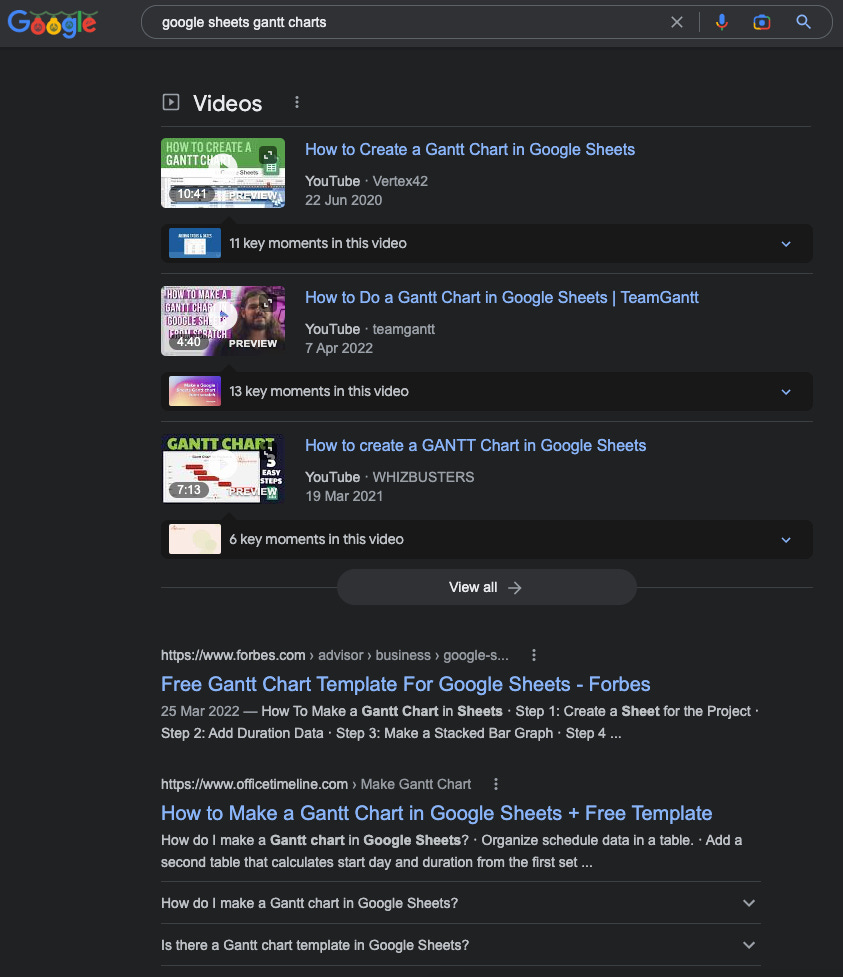
The most recent Zapier blog post just laid out the newest Google Sheets feature for me: native Gantt Charts! I cannot yet access it on my company account, but the intention is clear: Gantt Charts are a helpful timeline visualization Google Sheets (and Excel) are rigid spreadsheet software tools employees use for nearly everything. No doubt that you can get quite a bit of traffic with tutorials on how to set up marginally more complex functions, graphs or visualizations that aren’t available out of the box. Same for Gantt Charts.
The bigger picture
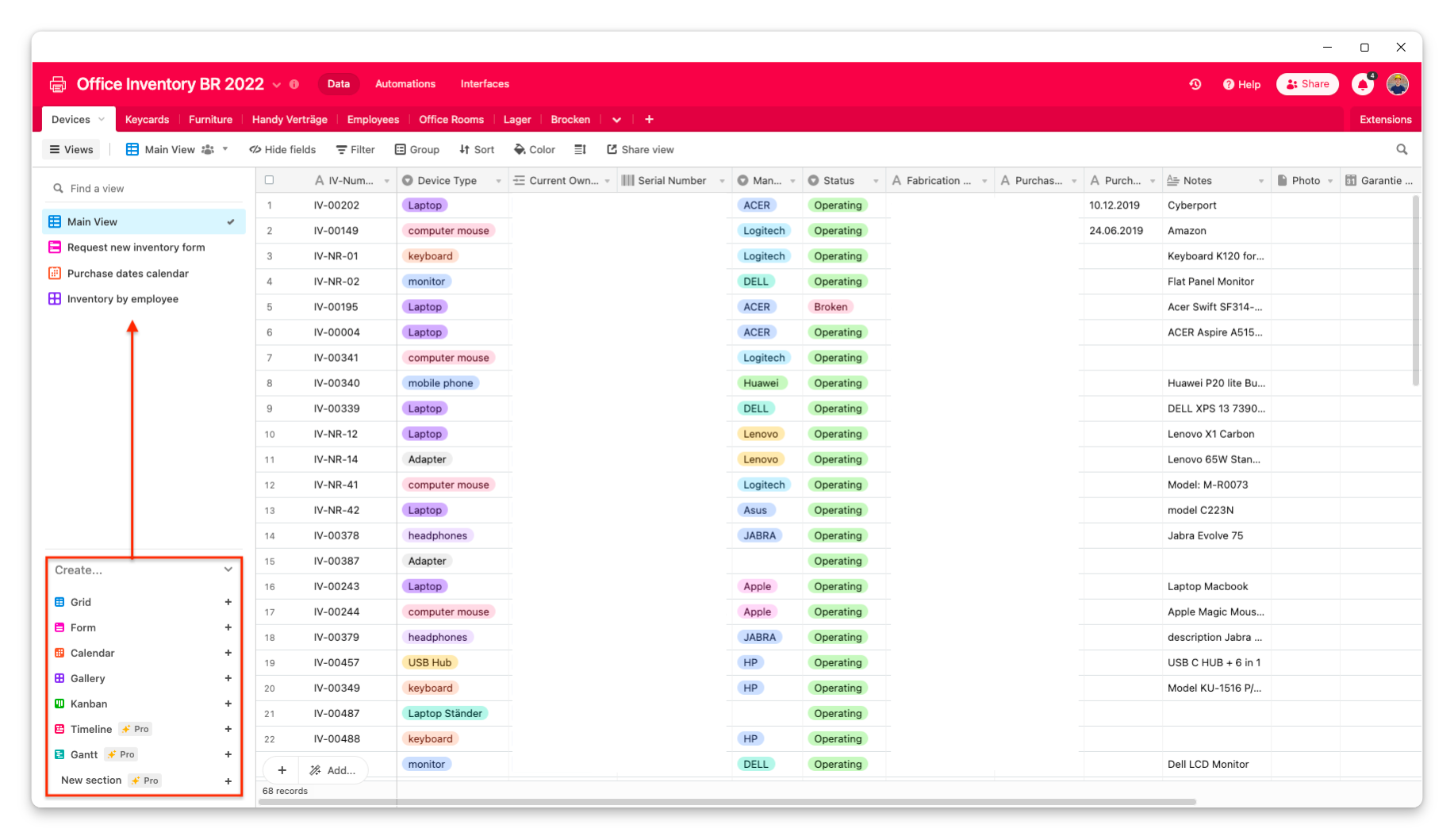
From my perspective - admittedly as an avid Airtable and Notion fanboy - Google Sheets is finally picking up on an enormous trend: representing the same data in multiple different views and with it, making the database more interactive.
The concept is simple: all the data records are stored in rows, just like in Google Sheets rows. On top of it, the records’ properties (in the columns) are typed, i.e. it’s not just a text in a cell but you can define the column to be, for example, attachments you can upload, set it to dates with a date picker. In Google Sheets I have to set the date format to German for the whole sheet every time 😩. In Airtable, you can also define single- or multi-select options.
Then, you can transform the data into different views that fit your needs, are more interactive than just a large spreadsheet with cells and can be made accessible to a defined group of users. Also, Airtable just throws a native form integration (to capture new records), automations and even a way to build simple interfaces from your data.
You can see I am in awe - I truly believe Airtable will turn the spreadsheet software market inside out.
(If you need help with setting up anything from an inventory registry to a Slack bot messaging system, please reach out, I love working with Airtable!)
Google Docs vs. Notion
Over the last years, Google successfully put an end to Microsoft’s de-facto monopoly on text processing software. How they did it is a different story, but - for me, personally - it was clear it’ll be fund to watch Docs snatch market share off of Word as the latter struggled to get real-time collaboration and versioning right. However, an increasingly digitized market does not stand still and during this time, other products sneaked into the game. Notion and similar tools like Coda took on making docs more engaging, expressive, collaborative and “long-living”. In contrast to writing my master thesis I don’t need overpowered functionality like customizable fonts, spacing, printing options etc. for a 1 or 2 page long, constantly evolving doc.
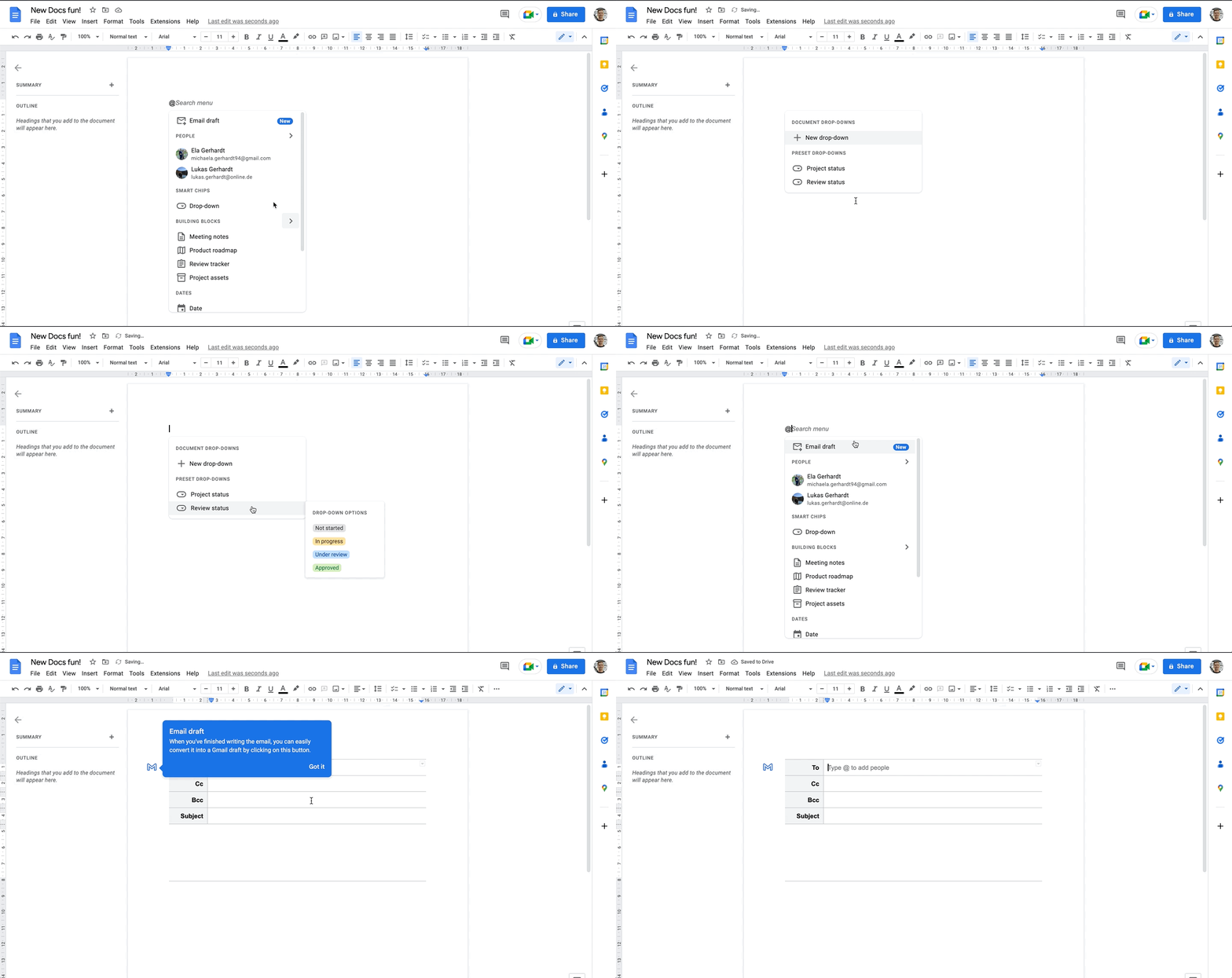
This year, however, Google carefully observed what is advancing against them and got the message. Today, we can see Docs picked up the more than a text-processing application trend in its recent feature releases. “Smart chips” and “building blocks” make the document more interactive than just typing and formatting text. Also, it directly integrates with the rest of the G-Suite platform as you can create email templates to be used in Gmail or add meeting notes linked to a Google Calendar event.
Kudos, Google, you will make it hard for me to defend Notion pages over my colleagues’ notes on a Google Doc next year! 👏
What will Microsoft do?
I don’t use Microsoft 365 anymore as we’re on Slack + Google combination at work, so I’m not really up to date with how Word, Excel and PowerPoint are evolving. I am certain, however, that the Excel hardliners won’t be torn away too quickly. My colleague Heinrich, for example, probably earned himself a superhuman Pivot Table PhD while working as a McK consultant.
Bearing in mind, the purity of complex calculations across multiple sheets with thousands of financial company data records, not looking at individual cells but how records are V- and H- and Z-looked-up and indexed and whatever can be highly satisfying when you’re deep into it. In fact, my brother-in-law, who ventured from auditing into M&A, gets as excited talking about how long his Excel workbooks have to run his calculations as I get about Notion and Airtable 😉.
However, the question is: will Microsoft dare to follow the trend or remain focused on their Enterprise customer target group?
This is probably my last newsletter this year. If you like the format, feel free to let me know! This year was about trying to figure out how newsletters and Substack works (and I’m still not a 100% sure how I want to run it) but I hope you will read more from me in 2023!
Have a blessed Christmas time and a great start into the new year! ✝️🎇